What Andy Burnham's Appointment as Prime Minister Means for Homelessness across the UK
This week, the UK got a new prime minister. For most of the country, that's a story about Westminster politics. For us, and for the sector we work in, it's a change that could shape how homelessness is tackled in this country for years to come.
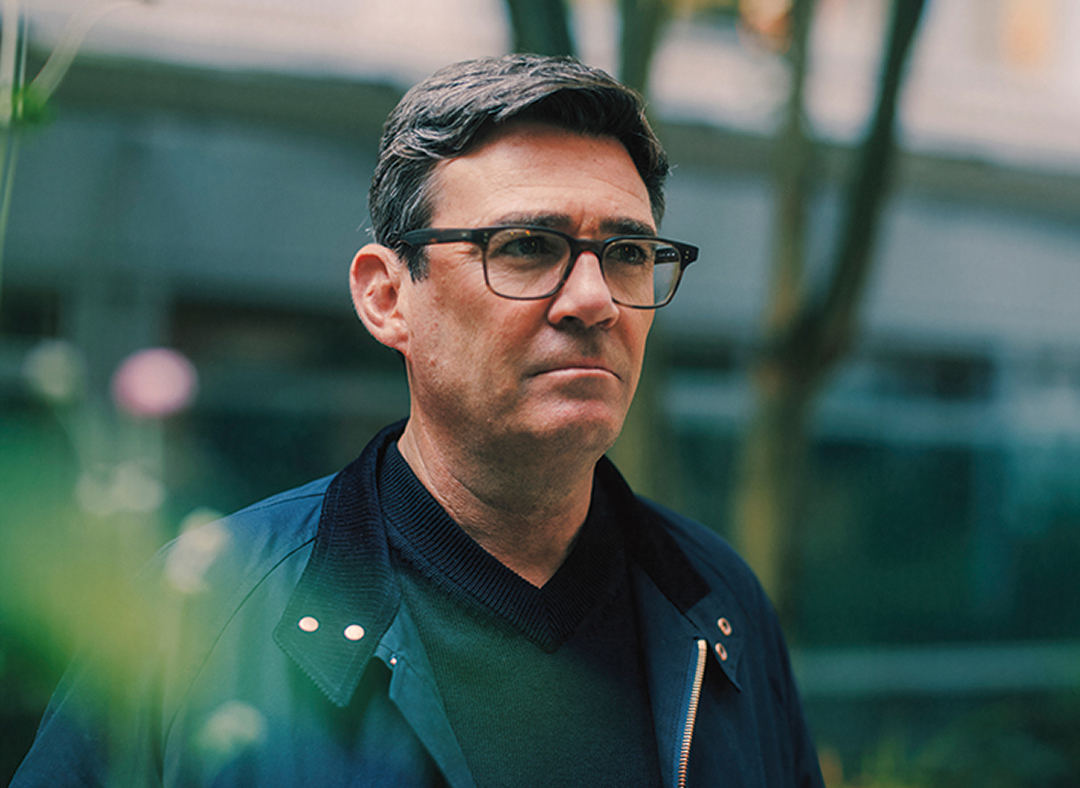
A big week for the United Kingdom this week, as we welcomed our new prime minister to Downing Street, Andy Burnham.
Taking office at a time when homelessness statitistics are about as stark as they've ever been, with record numbers of people rough sleeping and families in temporary accommodation, at the highest levels since records began.
On the very first day on the job, much to our pleasure, Andy Burnham named tackling homelessness as one of his top priorities, and backed it with £340 million in government funding aimed at ending rough sleeping.
We wanted to take the time this week to take a proper look at what he's actually said, what he's done before, and what we, and the wider sector, want to see happen next.
"Everything Starts With a Good Home"
In the weeks before becoming prime minister, Andy Burnham wrote a piece making his position pretty clear, saying: "Everything starts with a good home. If you do not give people a good home, what chance have they got of having a good life?"
It's a strong statement, and one we agree with as a supported accommodation provider. But it's worth pressing what he actually means by it, because we know that the answer isn't just about bricks and mortar and what a home looks like.
On those more physical standards for housing, Andy's record suggests he takes this seriously. As Mayor of Greater Manchester, he pushed to bring thousands of existing properties up to standard to prevent damp and mould, a commitment tied directly to the death of two-year-old Awaab Ishaak, who died from mould exposure in Rochdale in 2020. He also backed a Good Landlord Charter, giving councils in Greater Manchester the ability to intervene, and even acquire properties, from landlords who wouldn't meet decent homes standards.
So when he talks about a "good home," we're pretty confident he understands that on a physcial, safety, and health level. But we are also interested in hearing more on his standpoint on support, in combination with housing, as well.
A Promising Track Record
As Mayor of Greater Manchester, Andy Bunrham introduced a Housing First scheme built on a simple but often overlooked principle: give someone a stable home first, without demanding they prove they're "ready" for it, and then wrap tailored support around them once they're settled.
The results of this scheme speak for themselves, with the scheme helping more than 300 people move into permanent homes paired with personal support, achieving an 82% retention rate, meaning the overwhelming majority stayed housed. That's a meaningfully different outcome to simply handing someone a set of keys and hoping for the best.
We think this previous experience is why the sector's reaction to his appointment has, on the whole, been genuinely hopeful. More than 75 homelessness organisations, including Crisis UK, Change Grow Live, and St Mungo's, signed an open letter calling for exactly this kind of leadership, describing the moment as potentially "a seminal moment in our nation's efforts to turn the tide" on homelessness. Homeless Link, which represents 750 frontline homelessness organisations across England, has similarly welcomed his approach and its focus on housing paired with support.
Prevention, Not Just Response
One thing that's easy to miss amongst the headlines about his statements on rough sleeping and the funding being granted there, is that Andy Burnham has also framed his approach around prevention, building what he's called "a more preventative state," rather than only responding once someone is already on the streets.
We agree that this viewpoint matters an awful lot, because this is the root of all homelessness and ultimately affects the economics of the issue.
Crisis has estimated that a year of rough sleeping costs around £20,128 per person, compared to roughly £1,426 for a successful prevention intervention. Catching problems before someone loses their home isn't just kinder, it's dramatically cheaper, and it's an area where his own record in Greater Manchester (a dedicated Homelessness Prevention Strategy tackling insecure housing and unfair evictions, alongside a Youth Homelessness Prevention Pathfinder for under-35s) suggests genuine prior commitment.
There's also a historical precedent worth remembering here. Between 2003 and 2010, homelessness recorded by local authorities fell by around 70%, driven by an approach that had councils working with health and social services and intervening early with tenancy support, mediation and advice. It's proof that this problem is genuinely solvable with the right approach and sustained political will, not something that has to simply be managed indefinitely.
A Reality-Check
We don't think it's useful, or honest, to only tell the encouraging parts of this story.
First, we need to look at scale. The £340 million funding announced is described as covering 1,200 homes and intensive support for 3,000 people. Which is a great amount of government funding, but, putting that against context: rough sleeping counts in England alone are already at a record high, and IPPR analysis has warned homelessness could rise by a further 25% by 2030 without stronger intervention. This is a meaningful start, but not a solution at this scale, and Andy Burnham himself has described it as the first phase of a five-year programme.
Second, delivery. IPPR's own response to his first speech as PM put it plainly: "big promises must be followed by big action... the honeymoon period for the new PM will be short." That's a fair statement. Announcing funding is one thing; getting it to actually reach frontline delivery, including local, community-led organisations like ours, is another.
Thirdly, his own track record isn't completely spotless. Andy Burnham pledged to end rough sleeping in Greater Manchester by 2020 as mayor. He didn't meet that target, and rough sleeping in the region has risen for four consecutive years since. That doesn't mean the Housing First approach doesn't work, the retention data suggests strongly that it does, but it's a reminder that ambition and delivery are two different things, and we should hold this administration to the same standard we'd hold anyone else to.
What We Want to See Moving Forward
Given all of this, here's what we'll genuinely be watching for over the coming months and years:
Funding that reaches support, not just housing stock. A home without support attached doesn't achieve what Andy Burnham's own Housing First data shows works. We want to see funding explicitly ring-fenced for the "personal support" side of this equation, not just acquisition and construction costs.
Funding that reaches local organisations, not just national contracts. The people doing this work day to day, often small, community-rooted organisations like ours, need a route to actually benefit from this investment, not just the larger national providers.
Prevention treated as important as response. Ending rough sleeping matters enormously. But stopping someone from becoming homeless in the first place is cheaper, kinder, and ultimately more effective. We want to see this properly funded as a parallel priority, not an afterthought to the more visible rough sleeping pledge.
Sustainment, not just move-in. Getting someone into a home is the easy part to measure. Helping them stay there, through setbacks, relapses, and the genuinely difficult, non-linear process of rebuilding a life, is where the real work happens. We'd like to see that reflected in how success is measured, not just "homes provided" but "homes sustained."
Honesty about scale and pace. We'd rather see a realistic, well-funded plan that takes longer than a rushed announcement that doesn't survive contact with reality. The sector has heard big promises before.
We're choosing to be cautiously optimistic. The understanding and empathy seems to be there, with Andy Burnham clearly knowing that a home alone doesn't rebuild a life, and his own record shows he's willing to build systems around that belief rather than just say it. But understanding and delivery are different things, and the difference is exactly where organisations like ours live every single day.
We'll keep doing our work regardless of what happens in Westminster. But we'll also be watching closely, and we'll be glad to see a government that seems, for now, to be asking the right questions.