Why Do People End Up Homeless? What Our Residents Have Taught Us
You're walking down the high street, and you pass someone who's homeless. You might wonder how they got there, where it went wrong. It's easy to reach for the obvious answers, but there's rarely just one reason — it's usually a build-up of a few things going wrong, one after another.
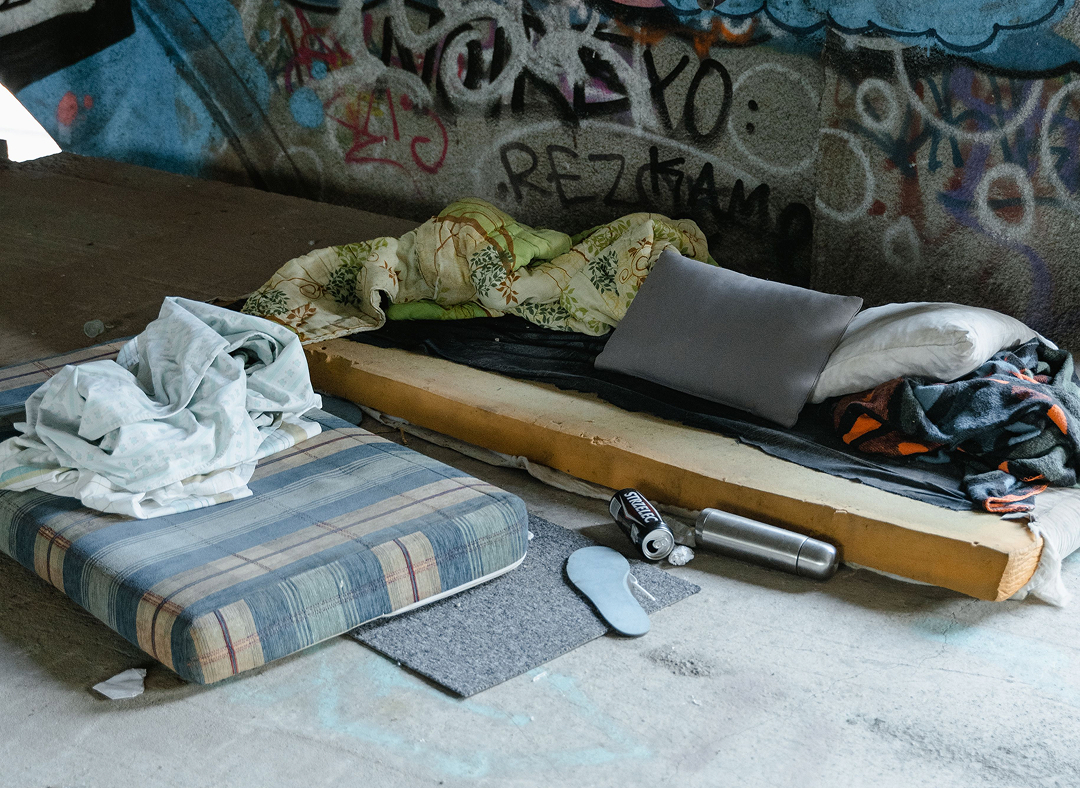
Homelessness rarely has one cause.
It's easy for us to reach for a single explanation: addiction, job loss, financial difficulties.
These things do happen, but in our experience, they're not the whole story of why someone has come to be homeless.
What we see more often is an accumulation of things. A few things going wrong, close together, until someone runs out of options and out of people to turn to.
A spiralling of issues, a catalyst towards instability.
Here's what that can look like:

Leaving care with no support system.
In the UK, young people usually leave foster care at 18. Some can stay with a foster family (if they have one) until 21 under a "staying put" arrangement, but it isn't guaranteed and depends on the local authority.
Support is meant to continue in the background, through a personal adviser, a pathway plan, some financial help, up to the age of 25. But in practice, that support is inconsistent and some young people go weeks or months without hearing from anyone.
Compare that to most people, who now don't leave their parents' home until their early twenties, often with a family to fall back on if things go wrong. Care leavers don't get that safety net. They're also subject to a "local connection" test when applying for homelessness support, and they lose priority need status once they turn 21.
Care leavers are considerably more likely to experience homelessness than their peers, with a significant proportion becoming homeless within two years of leaving care.
Losing the person whose name was on a tenancy.
If you're living with someone who dies suddenly and their name was the one on the tenancy, you can often find yourself in a difficult situation. What happens exactly depends on the details:
- If it was a joint tenancy, the surviving partner usually keeps it automatically. But most tenancies can only pass on once. This means any dependants usually won't be able to inherit a tenancy, leaving them vulnerable if both parents die.
- If it was a sole tenancy in their name only, only certain people can take it over. Usually a spouse or civil partner who was living there at the time, or in some cases another family member who'd lived there for at least a year. If you don't qualify, the landlord can seek possession.
It's a different picture again with a mortgage. If you weren't named on the mortgage or the deeds when your partner died, you have no automatic right to stay, no matter how long you lived there. It becomes a question of inheritance and probate, which can take months to resolve, sometimes while you're still living in the property with no certainty over your future in it.
A relationship ending later in life.
Divorce and separation are consistently one of the most commonly cited triggers for homelessness, and the risk is much greater for people who separate later in life.
Splitting one household into two is expensive by itself: legal costs, a second deposit, a second set of bills. But the deeper issue is usually that only one partner was ever financially "visible." If only one name was on the mortgage, the tenancy, or the credit history, the other partner can come out of a long relationship with no assets, no credit file, and no rental history to show a landlord.
This hits older people particularly hard. Savings that would once have cushioned a life event are often smaller or already spent, and re-entering work or the rental market later in life is harder than it would have been at 25. It's part of why homelessness among people over 50 is rising, not falling.

Giving up everything to care for a family member.
This one is easy to miss. It usually starts small: moving in "temporarily" to help a relative who's unwell, giving up a flat or a job to do it properly, living off their benefit or care payments in the meantime. For a while, it works. Then the relative dies, or moves into full-time care, and the support that was quietly holding everything together disappears in one go — the income, the roof, and often the only relationship keeping that person afloat.
Because the arrangement was informal, the caregiver's name is rarely on any lease or bill. There's no notice period, no protection, and often no one checking in on what happens to them next.
It's also the grief and homelessness arriving at the same time, which makes it one of the hardest situations to reach people in before it happens.
Coercive control.
Not always visible as abuse. Coercive control is sometimes financial: someone left with no money, no credit history, and no way to secure a home once they've left.
This can happen to men and women, and it leaves people in a genuinely vulnerable position. Without a credit history or a rental reference of their own, even someone with a job can struggle to pass a private landlord's checks.
Where coercive control sits alongside other forms of domestic abuse, someone can be pushed out of their home facing an impossible choice: risk their safety by staying, or risk their stability by leaving.
Coming out of prison with nowhere to go.
Prisons don't automatically arrange housing before someone is released. Support exists, and there are probation officers and resettlement teams, but it's inconsistent, and there's no guaranteed right to accommodation.
In the most recent full year of data, a significant proportion of people leaving prison in England and Wales were released homeless or sleeping rough.
It's also a cycle that runs in both directions. Losing stable housing is one of the recognised pathways into reoffending, and people released without settled accommodation are significantly more likely to end up back in the system. For a lot of the people we support, prison isn't where the instability started. It's often further down a road that began with some of the same issues on this list.
A breakdown in family relationships.
Coming out as gay, rejecting a religion or adopting a new one, a mental health crisis, or a falling out with family after standing up against familial abuse can close the door on going home, and on the support that usually comes with it.
Sometimes this also means losing access to important documents, passports, birth certificates, paperwork, either because they're withheld or simply because there's no longer anyone willing to help track them down.
Debt that spirals.
It's not always rent arrears. A change in benefits, an unexpected job loss, an unexpected bill, or a gambling addiction can tip things over.
Credit cards and "pay later" schemes often play a quiet part in this too. What starts as a way to cover one unexpected cost can turn into minimum payments that barely touch the balance, then missed payments, then a debt that's grown faster than anyone intended.
Leaving hospital or rehab with no housing waiting.
This can happen after a mental health crisis, a rehab stay, or any hospital admission where someone's previous accommodation, often a private rented tenancy, doesn't hold while they're gone.
Hospitals do have a legal duty to refer anyone at risk of homelessness to the local council before they're discharged. But that only works if the risk is identified, and if the person consents to the referral. It doesn't always happen in time, and it doesn't always result in somewhere for that person to actually go on the day they leave.
None of these happen in isolation.
Usually it's two or three of these issues, combined with addiction, mental health issues, and financial instability, that stack on top of each other, until the ground gives way.
A young person without higher-level qualifications leaves care with no one behind them. The unstable, low-paid work available to them is hit by economic difficulties or a change in Universal Credit. Rent arrears build up, and the person finds themselves homeless without a family unit to help them get back on track.
Or someone is released from prison with no fixed address. The stigma of a criminal record makes work hard to find. Family relationships that were already strained don't hold.
Or someone gives up their flat to care for an ill parent. When their parent dies, they lose their home and their income within weeks of each other, at the exact moment they're grieving and least able to sort out what comes next.
That's why the support we give our residents once they're in our temporary accommodation looks at the many why's behind someone's situation, not just the fact of it.
If someone has no credit history because of financial coercive control or a relationship they were never named on, we work with them to build one. If someone left care with no one to teach them how to manage a tenancy, budget, or deal with a landlord, we teach them. If someone's paperwork was withheld, we help them replace it. If debt is the immediate pressure, we help them understand it and get it under control. If someone's world fell apart because they lost the person they'd spent years caring for, we give them the practical support their situation now needs.
Understanding what led someone here is how we help make sure it doesn't happen again.