What Would René House Do With Unlimited Funding?
If René House had unlimited funding for our supported accommodation services, the focus wouldn’t simply be on expanding our accommodation – it would be on homelessness prevention, tenancy preparation, and training our people.

It's a question we don't often get asked, but one we think about constantly: if René House had unlimited funding, what would we do with it?
The answer isn't to simply add more beds, as that doesn't solve the problem.
Instead, we'd use it to address the gaps we see every single day - the needs we can't quite meet, the extra level of support we wish we could provide, the outcomes we know are possible if only the right resources were there.
Here's what having access to unlimited funding would look like for an organisation like René House...

Homelessness Prevention and Tenancy Sustainment
The first thing we'd invest in? Prevention.
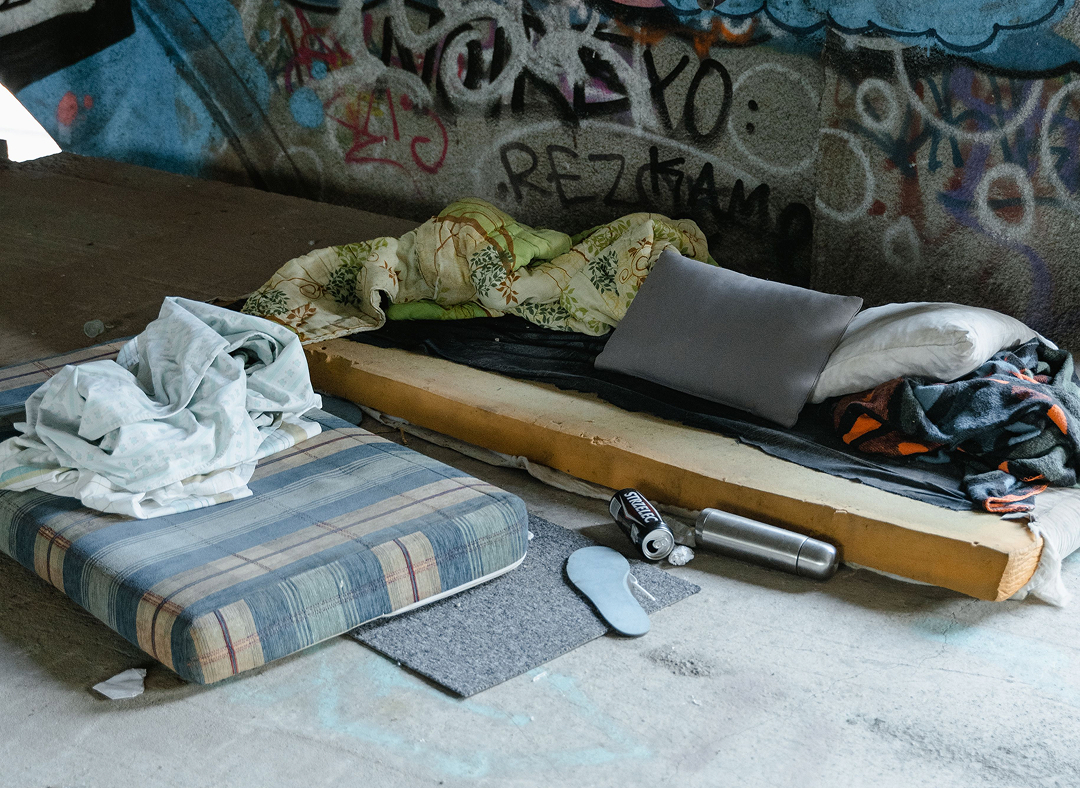
Right now, supported accommodation largely operates at crisis point. People come to us after they've already experienced homelessness. And by this point, things have already gone wrong.
We know, after almost eight years of doing this work, that earlier intervention makes all the difference. With unlimited resources, we'd work to develop better preventative tactics around homelessness – helping people who are struggling in their current housing before they reach crisis point.
We'd also deliver more around tenancy sustainment. Preparing our current residents for independent tenancies, and equipping them with the skills and confidence they need long before they're ready to move on. Don’t get us wrong, we do a certain level of this work already, but more needs to be done. More specialist services need to be created - or existing ones need to evolve and improve - to deliver the kind of support that prevents homelessness, rather than just responding to it.

Upskilling Our Team for Ever-Changing Needs
The needs of people experiencing homelessness have changed dramatically since we started René House back in 2018.
Eight years ago, someone coming to us after experiencing homelessness presented with a different set of challenges than what we see now. Today, we're seeing massive increases in mental health issues, addiction-related challenges, and learning difficulties when someone comes to our service. The landscape of homelessness is shifting, and we want (need) our team to shift with it.
With unlimited funding, we'd invest heavily in upskilling our support workers and managers. Training them in trauma-informed care. Equipping them with the skills to support people with complex mental health needs. Helping them understand and respond to addiction with compassion and effectiveness. Preparing them to work with residents who have learning difficulties and need different approaches to support.
As much as we want to do all of this - and we do, constantly - funding comes into it. There's only so much training, so much development, so much evolution we can afford as a service operating on tight margins. Resources and investment in our team would transform what we can offer residents on their journey toward independence.
The Big Dream – Move-On Accommodation
But if we're being completely honest, the biggest thing we'd invest in - the thing that we dream about - is move-on accommodation.
Move-on accommodation is a huge, glaring gap in the homelessness sector. And it's something we see play out painfully, repeatedly, with our own residents.
Here's what happens: someone comes into our service. They work incredibly hard. They engage with support. They build life skills. They tackle their challenges head-on. They get to the point where they're genuinely ready to move on and live independently. And then there are no viable options for them.
Rents in the private sector are sky-high at the moment. Many of our residents have never rented before, so they don't have a rental history that landlords look for. They don't have access to guarantors - the safety net that opens doors in the private rental market. And even if they're working and have secured employment, many are still receiving some level of benefits.
All of these are insurmountable barriers for them to move into their own accommodation. Can you imagine how frustrating that feels – to them, and to us?
Someone comes to us at one of the lowest points in their life. They work so, so hard to get ready to move on. They do everything we ask of them and more. And then they can't move on - not because they're not ready, but because the system has no pathway for them.
It becomes a form of bed blocking, almost exactly like what happens in the NHS. People who are ready for independence remain in supported accommodation because there's nowhere else for them to go. This means we can't free up spaces for new residents who desperately need them. It creates a backlog throughout the entire system.
And perhaps most heartbreakingly, it can be demoralising for the resident themselves. You've worked so hard, you've achieved so much, you're ready for the next chapter - and the door to that next chapter remains firmly closed.
%201.jpg)
For us, the solution is very clear: move-on accommodation.
This would be accommodation where people can go and live independently. They wouldn't need weekly support anymore because they've moved beyond that stage. But they'd be safe, and they'd be in accommodation that's affordable.
And importantly, we'd know them as individuals. We'd have known them for however long they lived with us. We'd know their strengths, their challenges, and their history. We'd know they're going to be great tenants.
But here's the tricky bit: for many private landlords, that's not enough. Our word, our professional assessment, that someone is ready, that they'll be reliable, that they'll be an excellent tenant - isn't enough to overcome the lack of rental history, the lack of a guarantor, the fact that someone is still on partial benefits.
Move-on accommodation would bridge that gap. It would be the natural next step between supported accommodation and full independence in the private rental market. It would create a pathway where currently there is a brick wall.
Why This Matters
These aren't abstract far-fetched ideas. They're a response to the real, daily frustrations we encounter in our work.
Every time we see someone struggle because prevention wasn't available earlier. Every time our team encounters a need they're not quite equipped to meet. Every time a resident achieves everything we've asked of them and still can't move forward. These moments accumulate. They remind us that while we're doing good work - work we're genuinely proud of - there's so much more that needs to be done.
There are other services needed too, of course. A great deal of them. And we're very much the type of organisation that says "we should do that, we should do that, that's not being done, we should do that." But we're also realistic enough to know that we're not necessarily the best people to deliver every type of service.
What we do know though is supported accommodation.
We know how to house people with dignity. We know how to deliver support that actually helps people move forward. And we know what the next step should be - move-on accommodation that creates a genuine pathway to independence.
The Reality Check
But, of course, we don't have unlimited funding.
What we have is housing benefit that covers property management - keeping properties safe, secure, and maintained to a decent standard. We have some universal credit contributions from residents for elements that housing benefit doesn't cover. And we have grants and one-off donations from individuals and businesses who believe in what we do.
That's roughly 15% of our income that isn't tied to housing management. That's what we have to work with for everything else - for all the dreams, all the gaps we want to fill, all the additional support we want to provide.
It's not nothing. We make it stretch as far as we possibly can. But it's also not unlimited funding.
So what do we do in the absence of unlimited resources?
We focus on building partnerships. We work to create a community of businesses and organisations who support what we're doing and want to be part of the solution.
We get better at talking about our work, our impact, our vision - something we'll be honest about, we've not always been great at as business leaders.
We continue delivering high-quality support with the resources we have. We train our team as much as we can afford to. We prepare residents for independence as thoroughly as possible. And we keep making noise about the gaps - about prevention, about move-on accommodation, about all the things that need to exist but don't yet.
Because the truth is, there's a lot of awareness right now about homelessness as a societal issue. People know it's a problem. What there's less awareness of is what the potential solutions are. What actually works. What's missing from the system. Where the money needs to go to create real, lasting change.
Organisations like René House are part of that solution. But we can't do it alone, and we certainly can't do it on housing benefit alone.
René House is a Community Interest Company providing supported accommodation across Nottinghamshire for adults transitioning out of homelessness. Find our more information about our work or contact us about partnerships and funding: info@renehousecic.com